Hi, I’m Neasa Egan, a Home Economics teacher and author of a Home Economics Recipe Book called Recipes for Life published by Folens. Many people also know me through my Instagram account, @comedineonline, where I share practical recipes from my home and classroom.
One of the questions I’m often asked — both in the classroom and online — is: “What should I put in a lunchbox?”
Over the years, I’ve shared practical advice on this topic, so I’ve brought together some of my best tips here. A lunchbox doesn’t have to be perfect. The goal is simply to provide a balance of foods that children enjoy eating and that give them the energy they need to learn, play and stay active throughout the day.
Build every lunchbox using these four simple steps — plus an optional extra snack for busier days.
Choose a wholegrain base
Wholemeal wraps
Brown bread sandwiches
Wholegrain rolls
Pasta salad
Oatcakes / Ricecakes
Wholemeal pitta bread
Bagels
Crackers
Add a protein
Ham
Chicken
Cheese (cubes, strings, cottage cheese)
Include fruit or vegetables
Apple Slices
Grapes
Pear SLices
Banana
Carrot Sticks
Cucumber Sticks
Pepper Strips
Pack a drink
Milk
Water
Optional extra snack
Hard-boiled egg
Popcorn
Homemade muffin
Energy balls
Hummus and veggie sticks
Raisins or dried fruit
Yogurt
Fromage Frais
If your child is particularly active or has a long school day, consider adding a small extra snack.
Lunchbox Swaps
Simple swaps parents love.
Instead of…
Try...
Chocolate bar
Yogurt with berries and granola
Fizzy drink
Milk or water
Crisps every day
Veggie sticks with a yogurt dip
White bread
Wholemeal bread
Sugary snack bar
Crackers with cheese
Neasa's Top 5 Time-Saving Tips
1
Prep Once, Use Twice
When making dinner, cook a little extra. Leftover pasta, rice, chicken or vegetables can quickly become tomorrow’s lunch.
2
Add a Splash of Colour
Try to include at least two different coloured fruits or vegetables. Colour usually means a wider range of vitamins and minerals.
3
Get Children Involved
Children are more likely to eat foods they’ve helped choose or prepare. Even simple jobs like washing grapes or packing a yogurt can make a difference.
4
Stick to Familiar Favourites
Lunchboxes don’t need to be adventurous every day. A mix of familiar foods that your child enjoys is often the recipe for a lunchbox that comes home empty.
5
Progress Over Perfection
Not every lunchbox needs to look picture-perfect. Some days it’s a balanced homemade lunch, and some days it’s a quick sandwich, fruit and a yogurt. Both are perfectly okay.
Lunchboxes Around Ireland
Junior Infants
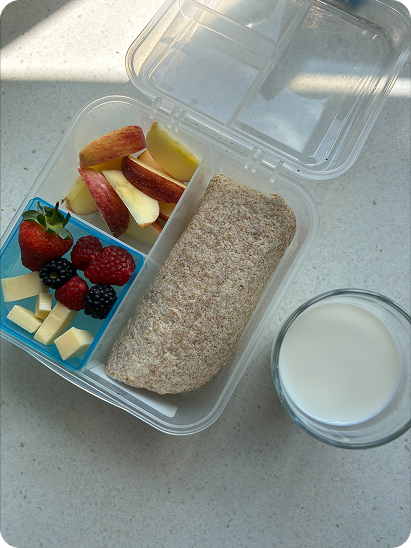
Wrap, cheese cubes, apple slices,berries and milk — small, familiar and easy to open.
2nd Class
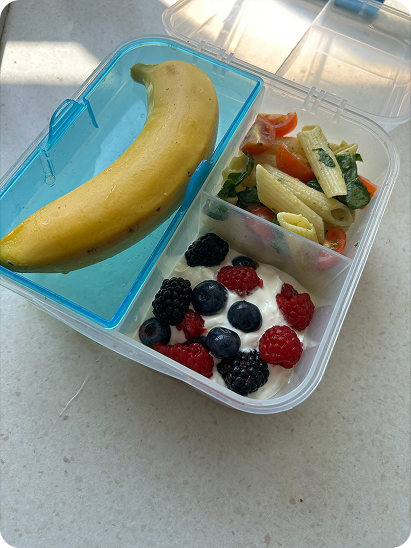
Pasta salad, yogurt, banana and berries — colourful with a mix of energy and dairy.
5th Class
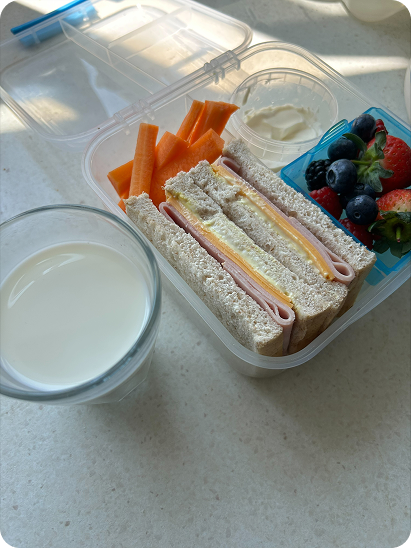
Wholemeal ham and cheese sandwich, carrot sticks, berries, and milk — filling for a longer day.
Milk is a fluid, made up of around 87% water. It’s important to drink enough fluids through the day — water and milk are the best choices between meals and snacks.
Humans are the only species that regularly drink another animal’s milk. Birds were once famous for pecking through the foil tops of doorstep milk bottles to get at the cream.
Ireland’s cows spend most of the year outdoors eating grass that grows naturally, so Irish dairy farming has a lower environmental footprint than dairy farming in many other countries.
Most people in Ireland can drink milk and eat cheese and yogurt without any problems. Only about 4–5 in every 100 have trouble digesting dairy — one of the lowest rates in the world.
Children should aim for at least 60 minutes of physical activity every day. Milk is a source of calcium, which is needed for the maintenance of normal bones.
By secondary school, you’re growing fast, becoming more independent and often balancing school, sport, hobbies and part-time jobs. A good lunch can help you stay focused, energised and ready for a busy day.
Build your lunch around balance
A filling lunch usually includes a source of carbohydrate for energy, protein for staying power, fruit or vegetables, and a drink.
Wholemeal chicken wrap, yogurt and an apple
Pasta salad with cheese, peppers and sweetcorn
Overnight oats with berries and a banana
Bagel with cheese and tomato, yogurt and grapes
Learn a few lunches you can make yourself
Knowing how to prepare your own lunch is an important life skill.
Prepare overnight oats the night before
Make extra pasta or rice at dinner for lunch the next day
Keep simple ingredients on hand for wraps, sandwiches and salads
Batch-make and freeze muffins or energy bites for busy weeks
Fuel your day, not just your break time
Many students eat breakfast early and don’t get home until late afternoon. A balanced lunch can help keep your energy levels steady throughout the day.
Include a source of protein such as cheese, yogurt, eggs, chicken or tuna
Add fruit or vegetables for vitamins, minerals and fibre
Bring water or milk to stay hydrated
If you're buying lunch…
You don’t have to make perfect choices every time. Think about what will keep you satisfied for the rest of the school day.
Choose a sandwich, wrap, roll or pasta-based option
Add a piece of fruit if available
Include a yogurt, milk or cheese-based snack
Choose water or milk as your drink
Looking for lunch ideas you can make yourself? Many of the recipes I helped create work brilliantly as student lunches — lunchbox bakes like berry yogurt muffins and cheese scones, quick breakfasts like breakfast cheesecake, and no-cook treats like the strawberry mousse and St Patrick’s smoothie.
“As a Home Economics teacher, I’m passionate about equipping young people with essential life skills in food, nutrition, and cooking. My work supports students in developing confidence in the kitchen while understanding the importance of balanced, nutritious eating, with a particular focus on practical, real-world learning that they can carry into everyday life.”
— Neasa Egan
See recipes in action
Prefer to watch? We also have some video recipes with step-by-step demos!